



Introduction
Performance marketing is one of the most effective ways for businesses to create measurable results while controlling advertising costs.
Unlike traditional advertising, this approach focuses on specific actions such as clicks, leads, sales, or conversions rather than paying for impressions alone. This allows businesses to track results accurately and optimize campaigns for better returns from day one.
I have a deep background in performance marketing specializing in developing tactics that maximize ROI and lower ad costs through data-driven plan precise audience focusing and continuous campaign optimization.
With the right strategies, companies can increase their return on investment (ROI), reduce wasted spending, and reach the right audience more efficiently.
In this guide, we’ll break down what this discipline actually involves, the tactics that consistently deliver results, and how to future-proof your campaigns as the digital advertising landscape continues to shift.
What is Performance Marketing?
Performance Marketing is a digital marketing strategy where advertisers only pay for successful results. These results may include website visits, lead generation, app downloads, or product purchases, rather than simple ad views or impressions.
Popular Performance Marketing channels include:
- Search engine advertising
- Social media advertising
- Affiliate marketing
- Display advertising
- Influencer partnerships
- Email marketing campaigns
Because every action is measurable, businesses can analyze data in real time and improve their campaigns continuously.
This data-driven nature is what sets this model apart from brand-awareness advertising, where success is harder to quantify and budgets are often spent without a clear line to revenue.

Why This Approach Matters for Modern Businesses
Marketing budgets are under more scrutiny than ever. Leadership teams want to know exactly what they’re getting for every dollar spent, and a results-based model answers that question directly.
Instead of guessing whether a campaign “worked,” marketers can point to concrete numbers: cost per lead, cost per acquisition, and return on ad spend.
This shift toward accountability has made results-based advertising the default choice for growth-focused companies, from early-stage startups to established enterprises looking to scale efficiently.
A well-run Performance Marketing program also gives finance and marketing teams a shared language: every campaign can be evaluated on the same metrics, which makes budget conversations far less contentious.
Common Mistakes to Avoid
Even experienced marketers can undermine their results with a few common missteps. Avoiding these pitfalls is just as important as adopting the right tactics.
- Chasing vanity metrics. Clicks and ad views look good in a report, but they don’t spend the bills.
- Ignoring mobile users. A large share of traffic now comes from phones, so any campaign that isn’t mobile-optimized is leaving conversions on the table.
- Setting and forgetting campaigns. Ad platforms change constantly. Campaigns need regular check-ins to stay competitive on cost and relevance.
- Overlooking attribution. Without a clear attribution model, it’s easy to give credit to the wrong channel and misallocate budget as a result.
- Testing too many variables at once. A/B tests only produce reliable insights when one variable changes at a time; testing everything simultaneously makes results impossible to interpret.
Avoiding these mistakes helps ensure that budget goes toward what actually drives growth, rather than toward activity that merely looks productive on a dashboard.

Effective Performance Marketing Tactics
Using the right tactics can significantly improve campaign performance and lower advertising costs. Below are the strategies that consistently produce the best outcomes.
1. Target the Right Audience
Audience targeting is essential in Performance Marketing. Businesses should focus on users who are most likely to convert based on demographics, interests, online behavior, and purchase history.
Accurate targeting helps reduce unnecessary ad spending and improves conversion rates.
Tools like lookalike audiences, custom intent segments, and first-party data integration make it possible to narrow in on high-value users rather than casting a wide, expensive net.
2. Optimize Landing Pages
A well-developed landing page increases the chances of converting visitors into customers. Landing pages should:
- Load quickly
- Have a clear call-to-action
- Be mobile-friendly
- Include persuasive headlines and visuals
- Build trust with testimonials or reviews
Better landing pages lead to lower cost-per-conversion and higher ROI. Even small changes, such as shortening a form or moving the call-to-action above the fold, can produce measurable lifts in conversion rate.
3. Use Retargeting Campaigns
Many users do not convert during their first visit. Retargeting allows businesses to reconnect with users who previously interacted with their website or ads.
Retargeting campaigns often generate higher conversion rates because they focus on users already interested in the product or service.
Segmenting retargeting audiences by behavior such as cart abandoners versus page browsers allows for more relevant messaging and better results.
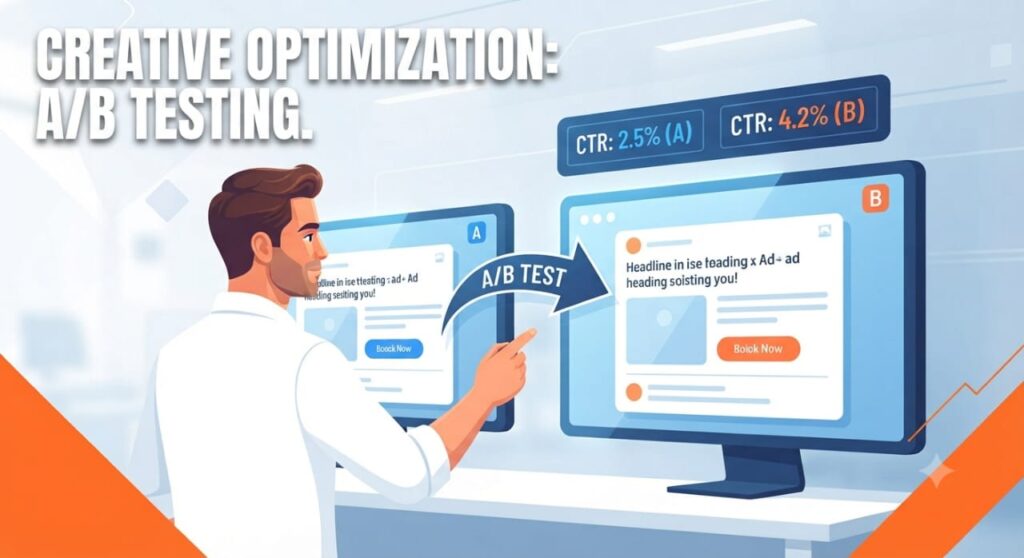
4. A/B Test Your Ads
A/B testing helps marketers compare different ad versions to identify what performs best. Businesses can test:
- Headlines
- Ad copy
- Images
- Videos
- Call-to-action buttons
Continuous testing improves campaign effectiveness and reduces wasted advertising spend. Even after a winning variant is found, ongoing testing prevents “creative fatigue,” where audiences stop responding to ads they’ve seen too many times.
5. Focus on High-Performing Channels
Not all marketing platforms deliver the same results. Businesses should analyze performance data regularly and invest more in channels with the best ROI.
This helps maximize profits while lowering overall ad costs. A simple monthly review of cost-per-acquisition by channel is often enough to spot which platforms deserve a bigger share of the budget and which ones need to be paused.
6. Improve Quality Scores
For search advertising, quality score plays a major role in reducing ad costs. Relevant keywords, high-quality ads, and optimized landing pages can improve scores and lower cost-per-click (CPC).
A higher quality score doesn’t just save money it often improves ad position too, meaning better visibility at a lower cost per click.

Benefits of Performance Marketing
Businesses that use Performance Marketing effectively can experience several advantages:
- Better return on advertising investment
- Lower customer acquisition costs
- Real-time campaign tracking
- Improved audience targeting
- Higher conversion rates
- Scalable marketing strategies
Because campaigns are data-driven, businesses can make smarter decisions and adjust strategies quickly. This flexibility is especially valuable during periods of financial uncertainty, when marketing budgets required to prove their worth faster than ever.
The Future of Performance Marketing
As digital advertising continues to evolve, automation and artificial intelligence are becoming increasingly important in Performance Marketing. AI-powered tools can analyze user behavior, automate bidding, and improve targeting for better campaign performance.
Privacy regulations and the phase-out of third-party cookies are also reshaping the landscape, pushing marketers toward first-party data strategies and contextual targeting.
Businesses that focus on data, optimization, and customer experience will continue to achieve stronger results while keeping advertising costs under control.
Key Metrics to Track
To know whether your Performance Marketing efforts are actually working, keep an eye on these core metrics:
- Cost Per Click (CPC): How much you compensate each time someone clicks your ad.
- Cost Per Acquisition (CPA): The total cost to acquire one paying customer or qualified lead.
- Conversion Rate: The percentage of visitors who complete a intended action.
- Return on Ad Spend (ROAS): Revenue generated for every dollar spent on advertising.
- Click-Through Rate (CTR): How often people wholook at your ad click on it.
Tracking these numbers consistently ideally in a single dashboard makes it far easier to spot underperforming campaigns early and reallocate budget before too much is wasted.

Frequently Asked Questions
What is Performance Marketing in simple terms?
It’s a form of digital advertising where businesses pay only for measurable results, such as clicks, leads, or sales, instead of paying upfront for ad impressions.
How is this different from traditional advertising?
Traditional advertising typically charges based on reach or impressions, regardless of outcome. This model ties spending directly to specific, trackable actions, making ROI easier to measure.
Which channels work best for results-based campaigns?
Search advertising, social media ads, affiliate marketing, and email campaigns are among the most popular channels because each one offers strong tracking and optimization capabilities.
How can I lower my ad costs?
Focus on precise audience targeting, improve landing page quality, run regular A/B tests, and monitor quality scores. Shifting budget toward your highest-performing channels also reduces wasted spend.
Is this approach suitable for small businesses?
Yes. Because budgets can be scaled up or down based on real results, it’s often a lower-risk option for small businesses compared to traditional advertising, which requires upfront spending without guaranteed outcomes.
Conclusion
Performance Marketing gives businesses a smarter, more accountable way to advertise.
By targeting the right audience, optimizing landing pages, running retargeting campaigns, and continuously testing ad creative, companies can lower acquisition costs while improving overall ROI.
As automation and AI continue to shape the industry, businesses that stay data-driven and customer-focused will be best positioned to grow profitably.
Ready to get additional out of your ad budget? Start auditing your current campaigns today, identify your highest-performing channels, and apply these tactics to turn every advertising dollar into measurable results.